About

Amit Jangid is a postdoctoral fellow in Dr. Tamar Friedlander's group at the Hebrew University of Jerusalem who specializes in using mathematical and computational modeling—including stochastic simulations and network theory—to solve intricate biological challenges. His research spans the evolution of self-incompatibility systems, gene regulatory networks, disease modeling, cell fate decisions, and complex systems.
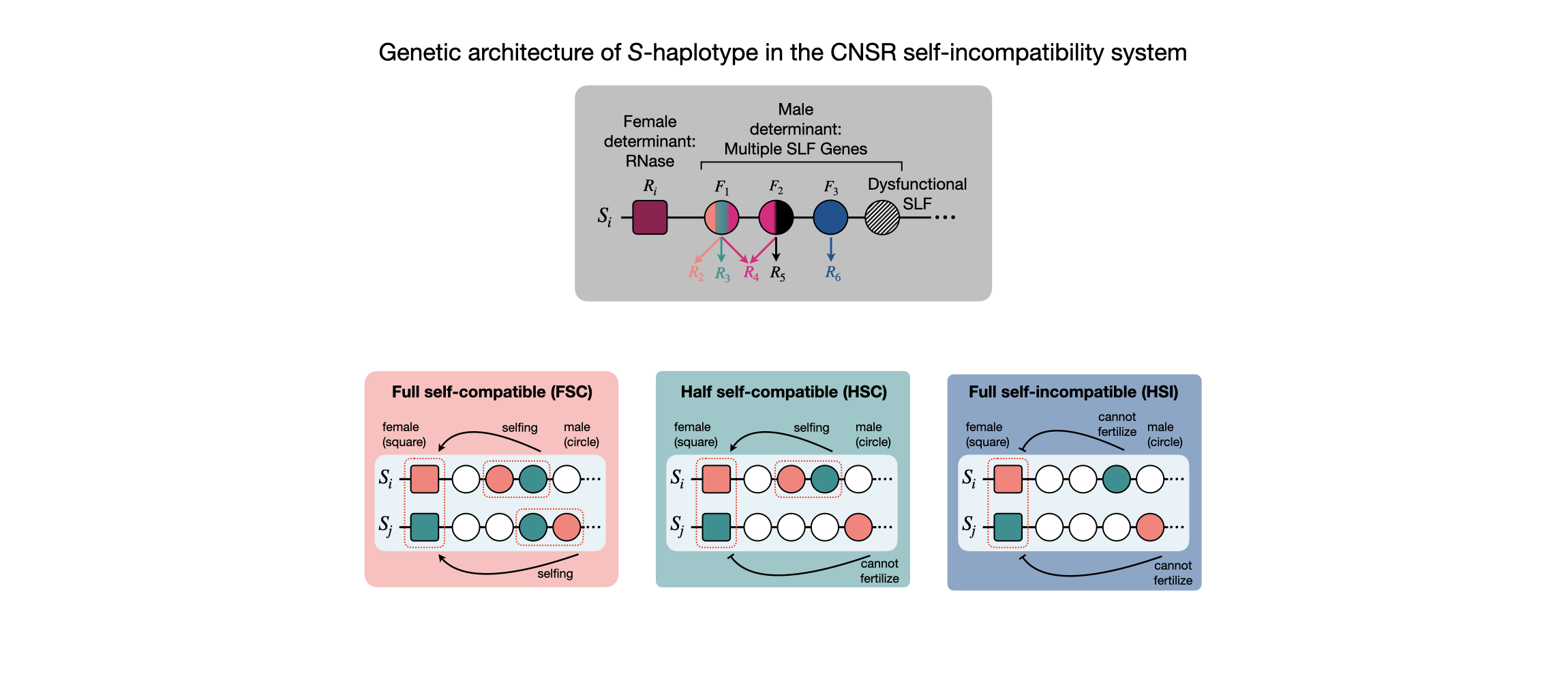
Currently, he is investigating the evolutionary mechanism of S-RNase-based collaborative non-self recognition (CNSR) type of self-incompatibility in plants.
Research
Postdoctoral Research
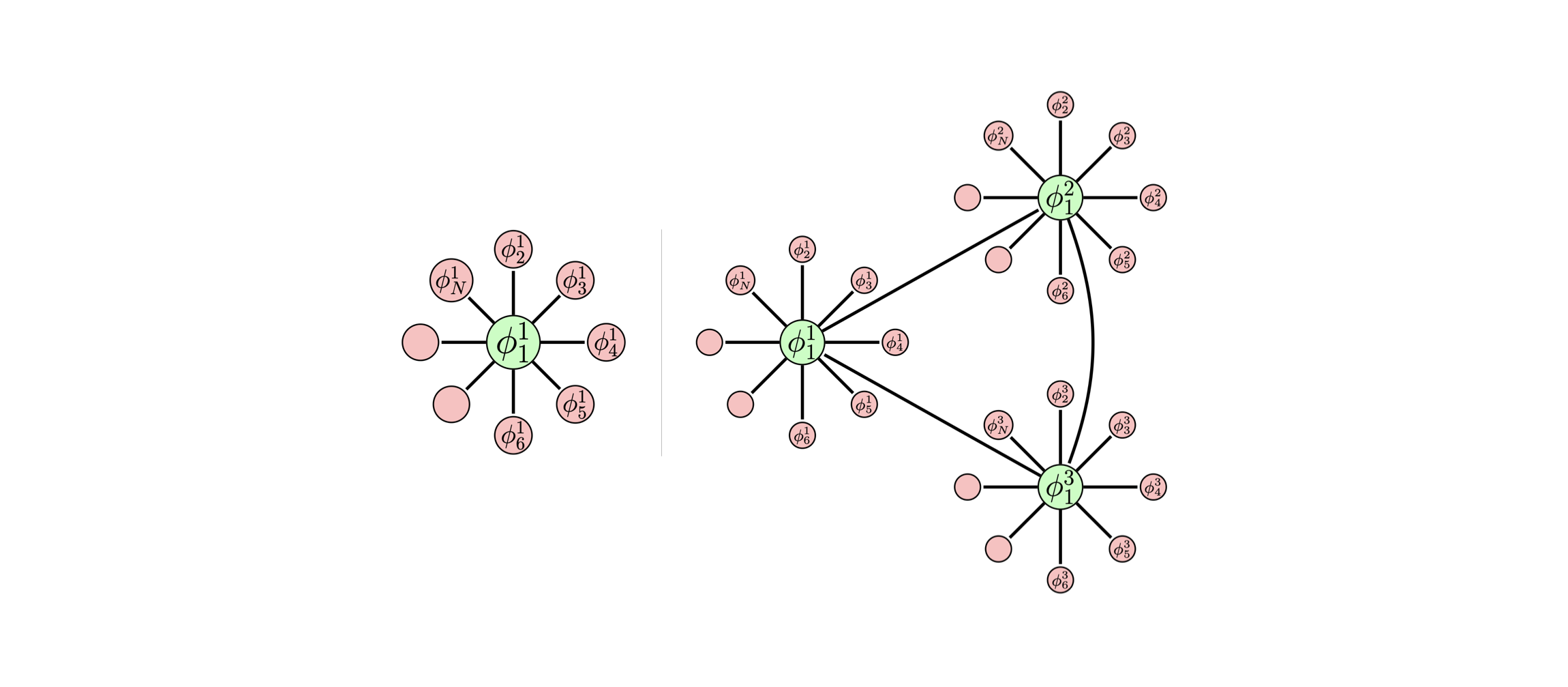
How structure shapes the allele diversity in self-incompatible
plants
We study the impact of the structure of the self-incompatibility system
on the allele diversity in self-incompatible plants. [on going]
Plant mating modes: self-compatibility, self-incompatibility, and
mixed
mode
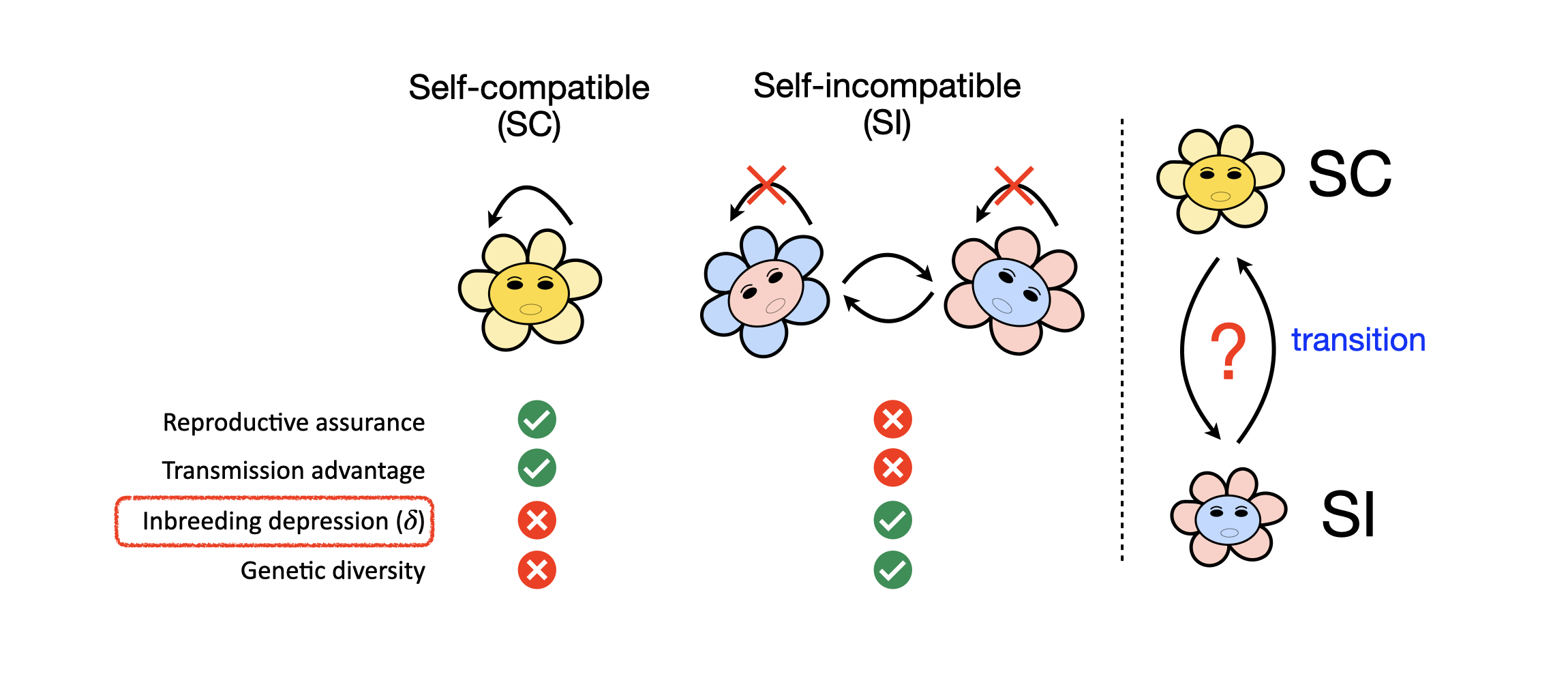
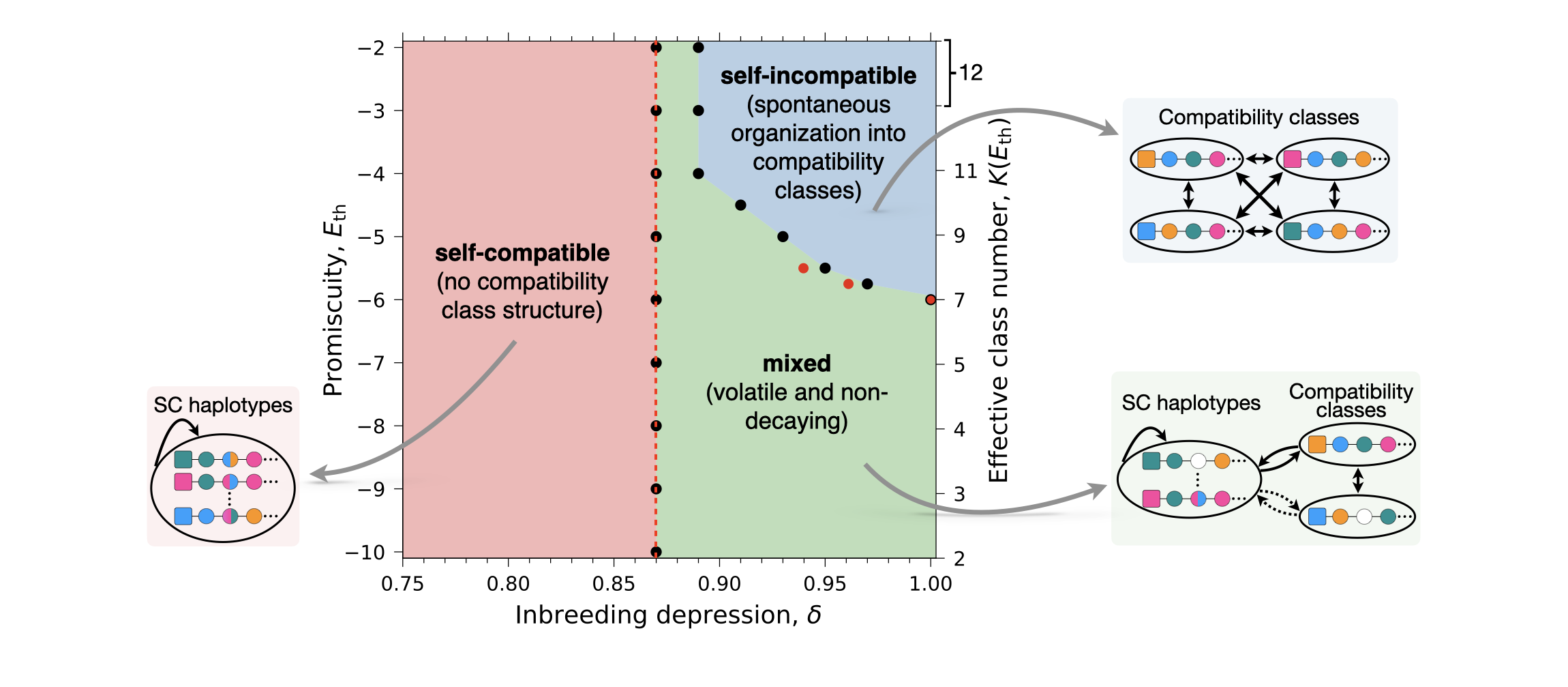
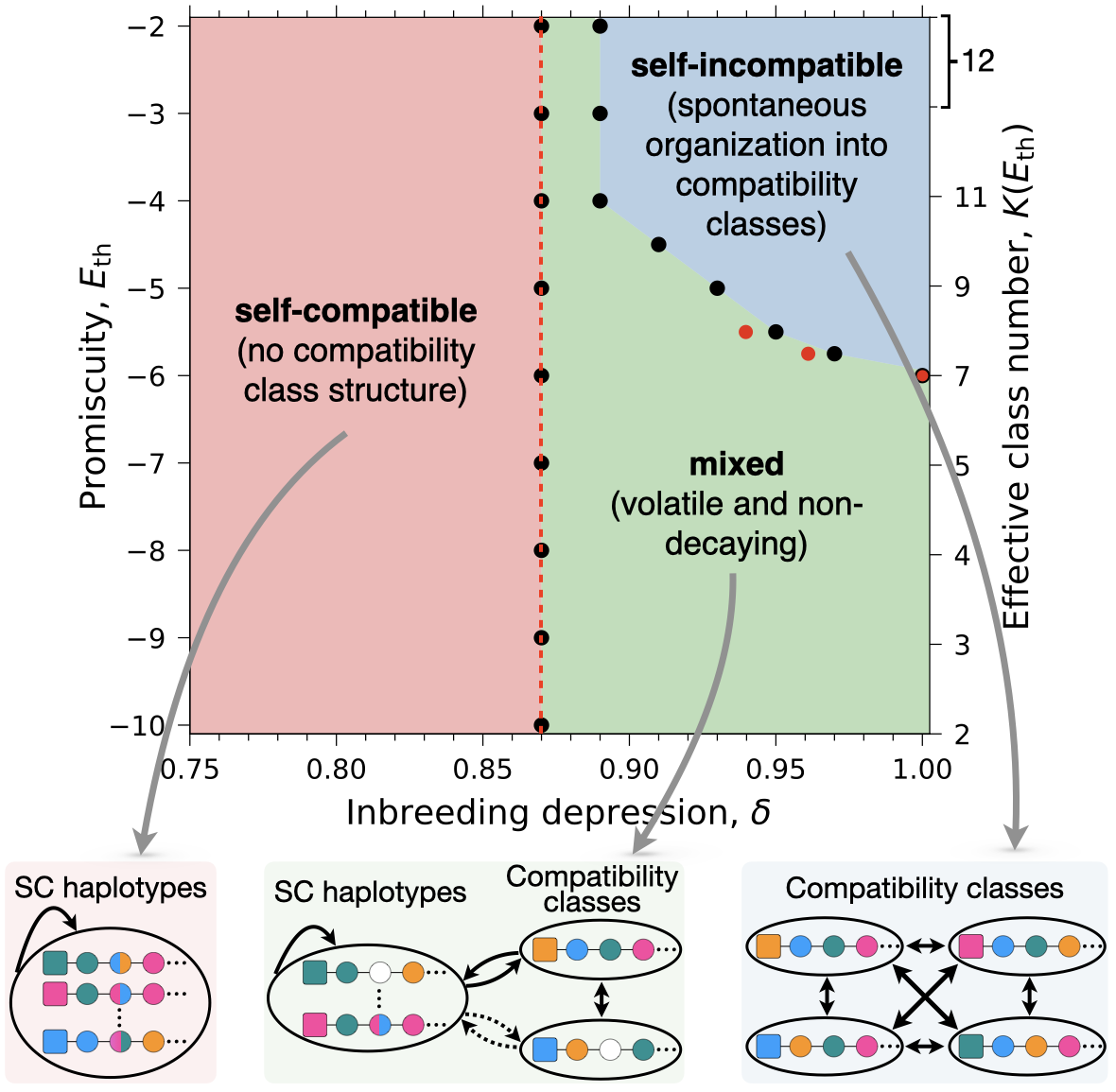
Addressing the elusive nature of mixed-mating, this study models how
molecular promiscuity and inbreeding depression drive the evolution of plant
self-incompatibility. This study uncover a phase diagram with three regimes: complete
self-incompatibility, self-compatibility, and a newly described mixed mode. This mixed mode is
distinct, characterized by vigorous, non-decaying fluctuations in the proportion of mating types
rather than a static balance. Furthermore, we find that evolutionary transitions between these
modes are often reversible, offering a dynamic new framework for understanding the stability of
diverse plant reproductive strategies. [Jangid A. et al. bioRxiv (2025)]
Reconciling conflicting selection pressures in
self-incompatibility systems
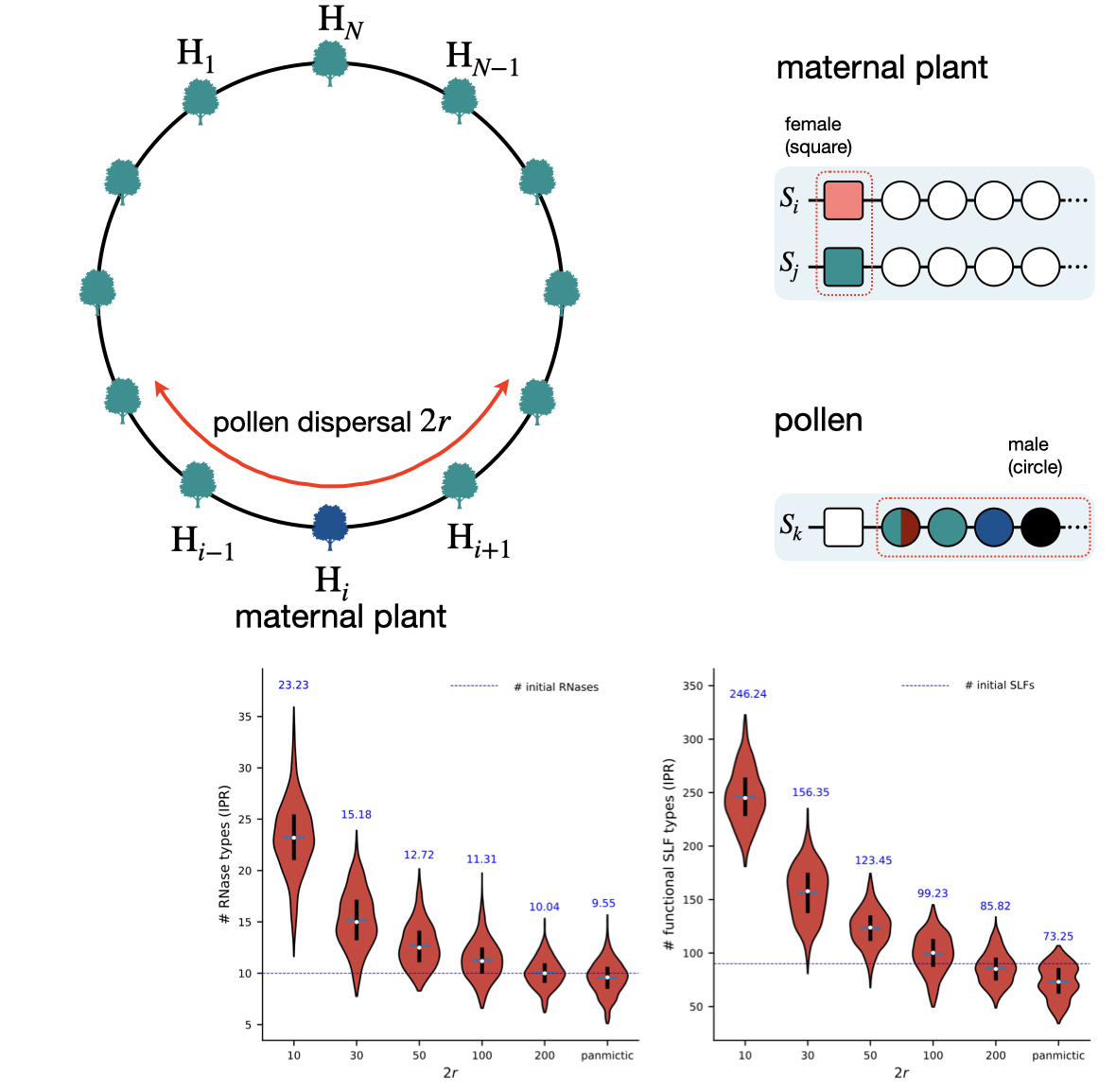
This study investigates how plant
self-incompatibility systems evolve under conflicting pressures to
specifically identify partners while avoiding self-compatibility. This work uncovered that
selection exerts an asymmetric effect, significantly impacting female protein amino acid
composition while leaving male proteins largely unchanged. In a very good agreement with genomic
data, this work offers a generalizable model for analyzing multiple selection pressures in
biological systems. [Jangid A. et al. Phys.
Rev. Res. 7(3) (2025)]
Evolution of small protein-protein interaction networks in
collaborative
non-self recognition (CNSR)
system in plants
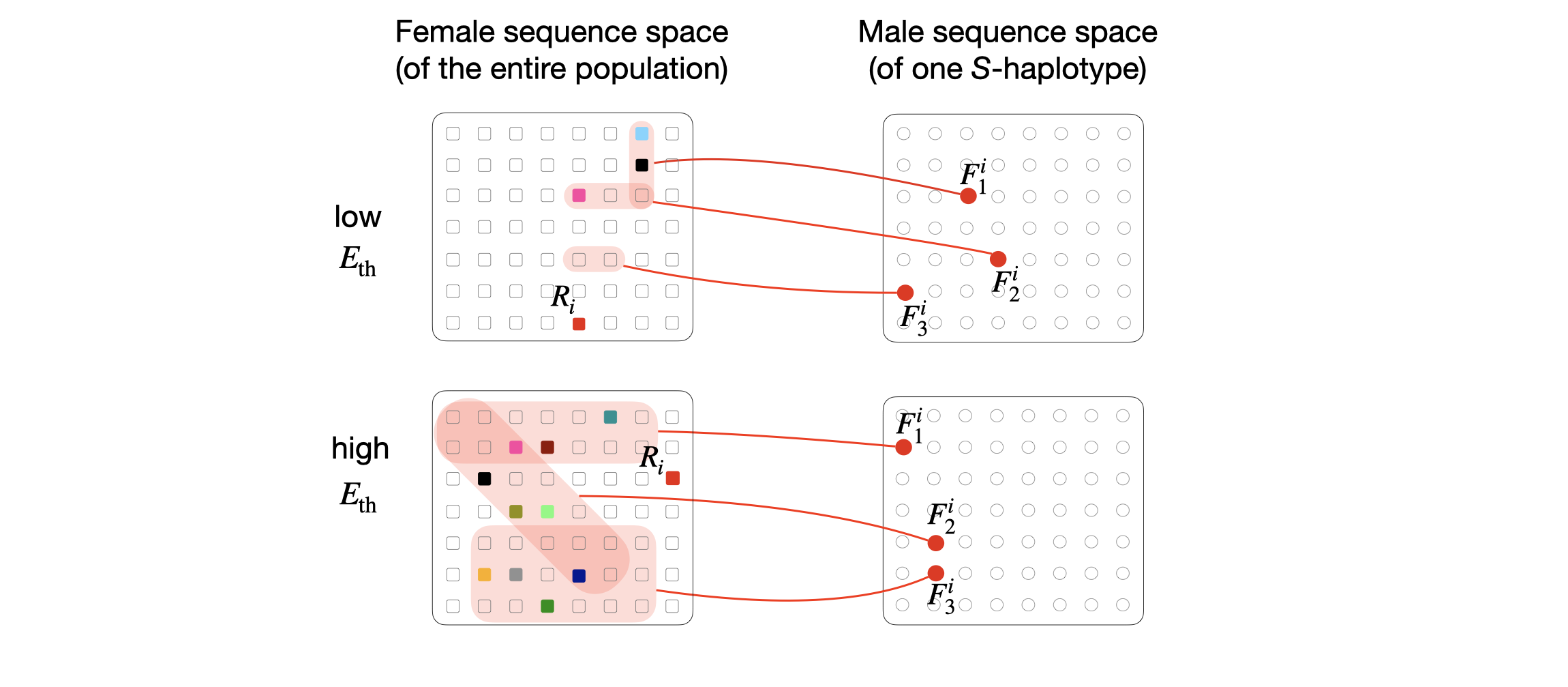
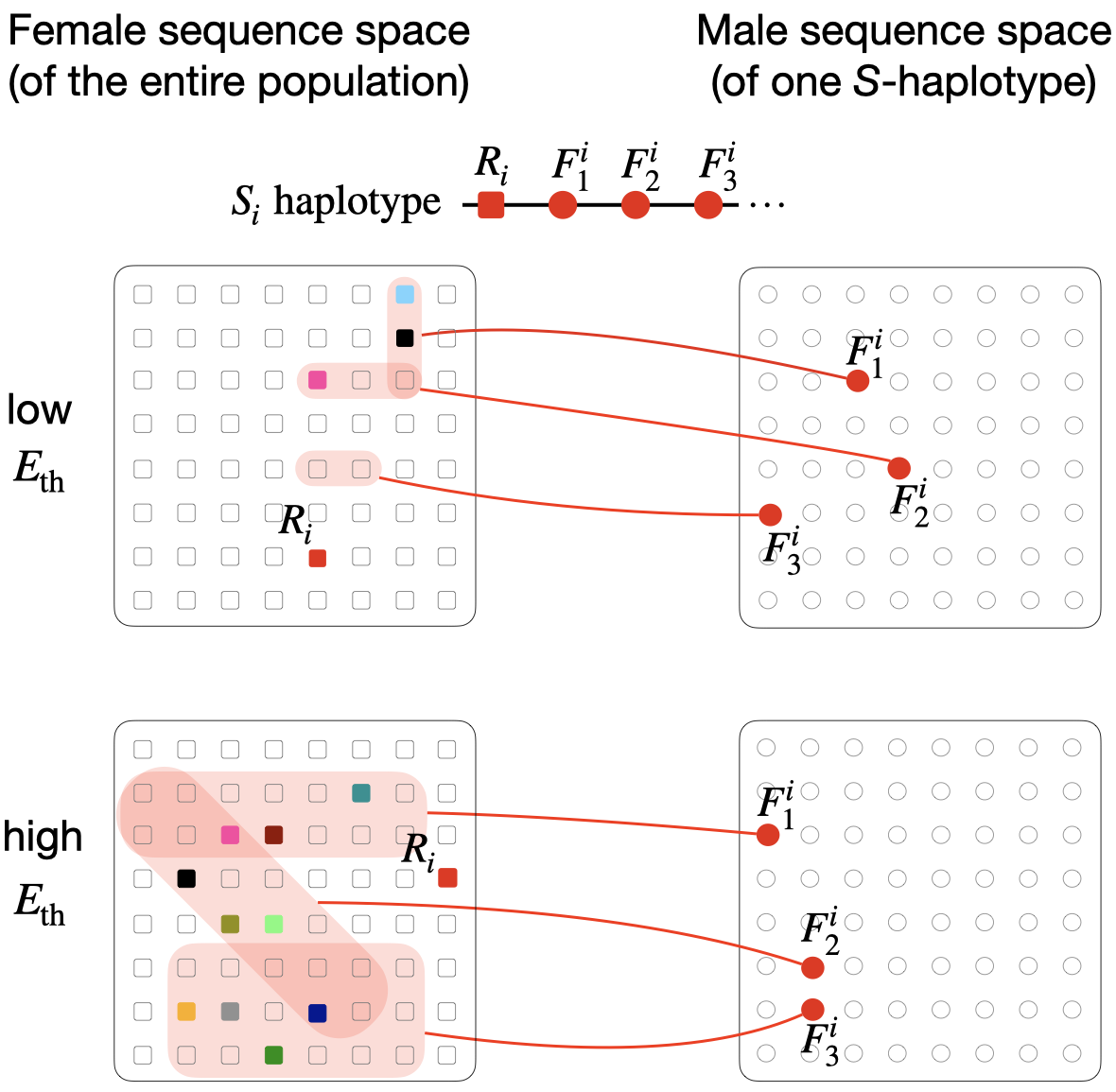
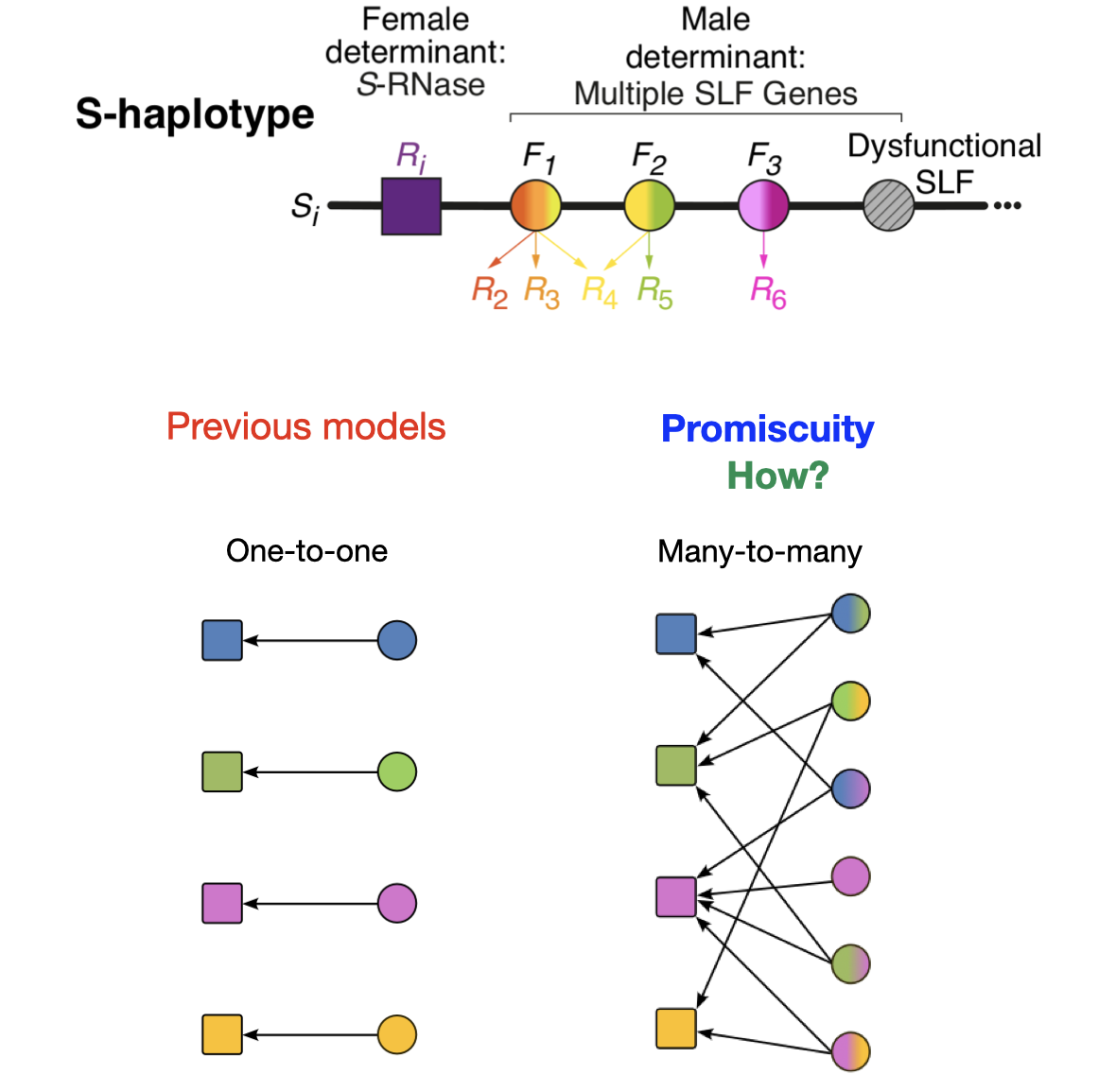
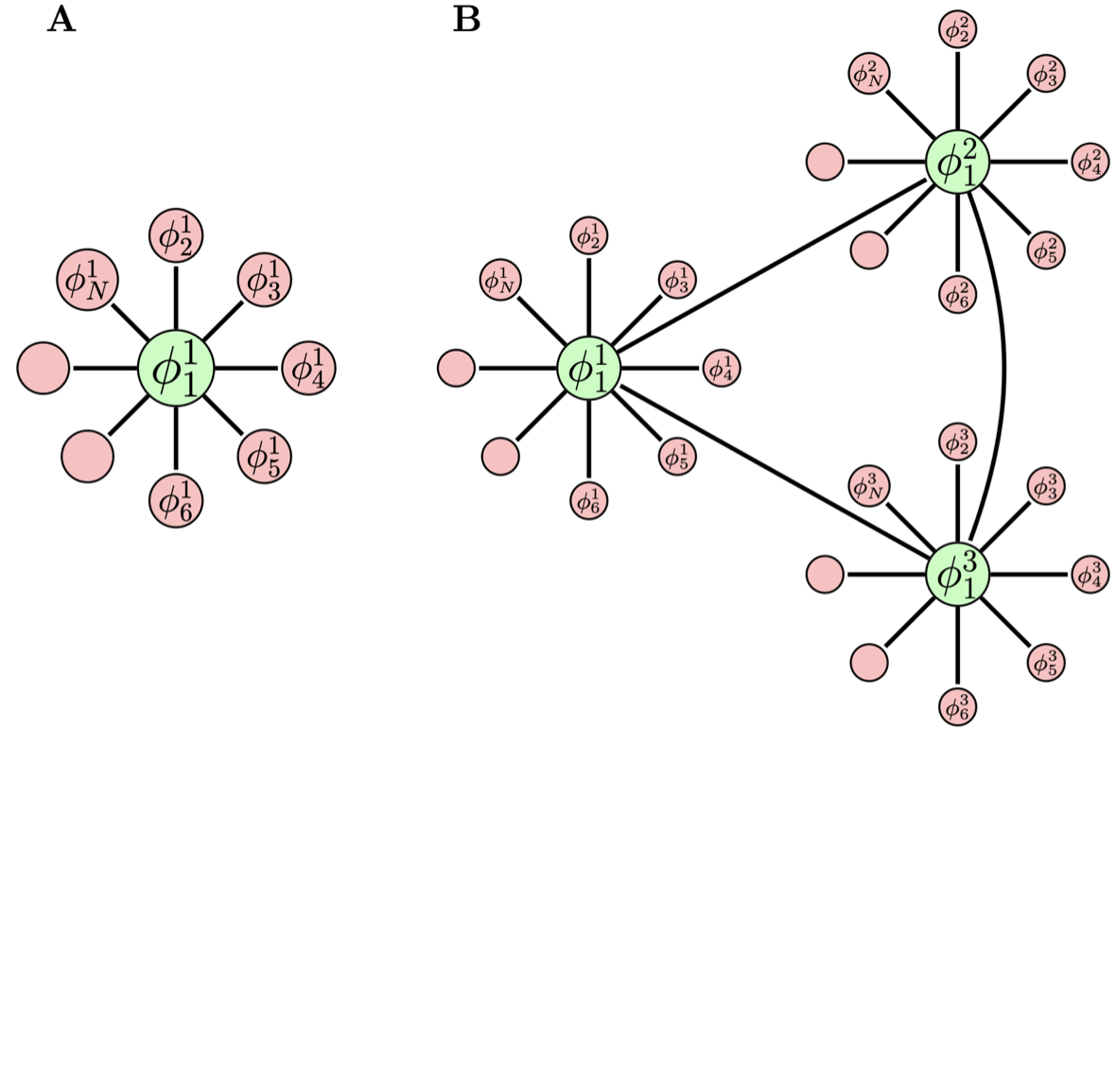
To understand how biological networks expand, we modeled the plant collaborative-non-self
recognition self-incompatibility system. Unlike previous approaches, our framework incorporates
interaction promiscuity and multiple protein partners. We show that these factors drive the
population to spontaneously self-organize into distinct compatibility 'classes,' maintaining a
dynamic balance between their emergence and decay. This underscores the importance of molecular
promiscuity in network evolvability and offers a broader framework for similar biological
systems. [Erez K., Jangid A. et al. Nat.
Commun. 15(1) (2024)]
PhD Research
Modeling IFN-$\gamma$ and IL-4 mediated networks in Atopic
Dermatitis
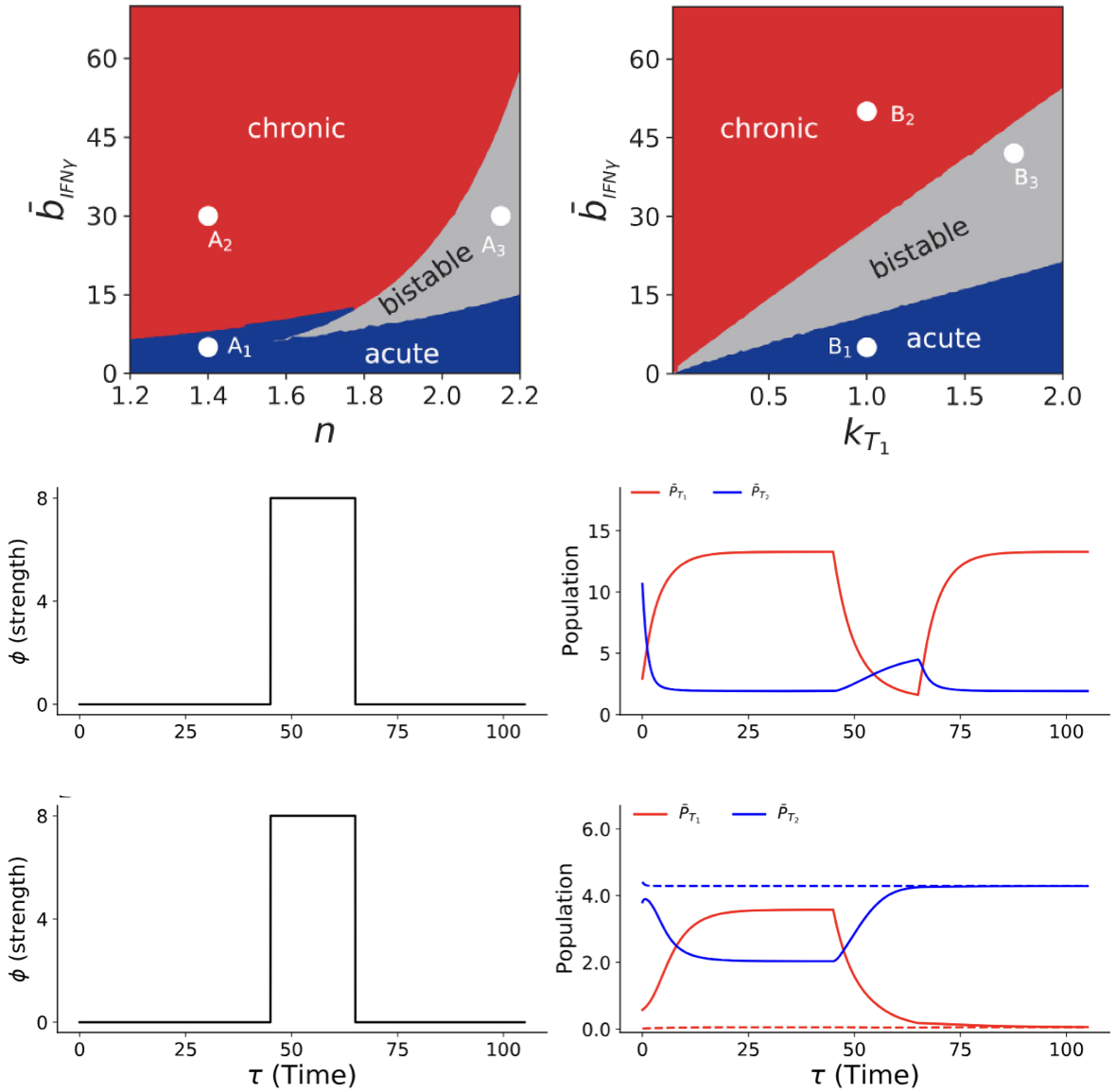
Atopic Dermatitis (AD), an auto-immune skin disease, is mainly
characterized
by an imbalance in Th1 and Th2 populations due to environmental interactions. Many cells and
cytokines
are involved in the pathogenesis of AD. We have modeled the networks of Th1, Th2, dendritic, and
keratinocyte cells mediated by individual two key cytokines (IFN-$\gamma$ and IL-4). In the
model, we
have assumed that cytokines dynamics approach its equilibrium faster than cell dynamics. From
sensitivity analysis, we observed that transitions between acute and chronic states may be
through two
different paths, namely, smooth and abrupt. Depending on the nature of the cytokines, there is a
possibility to drive the system from a bistable phase to the acute state by giving external
stimulus. [Pandey R. et al. Theor. Biol.
556 (2023)]
Stress driven minimal p53 regulatory pathway
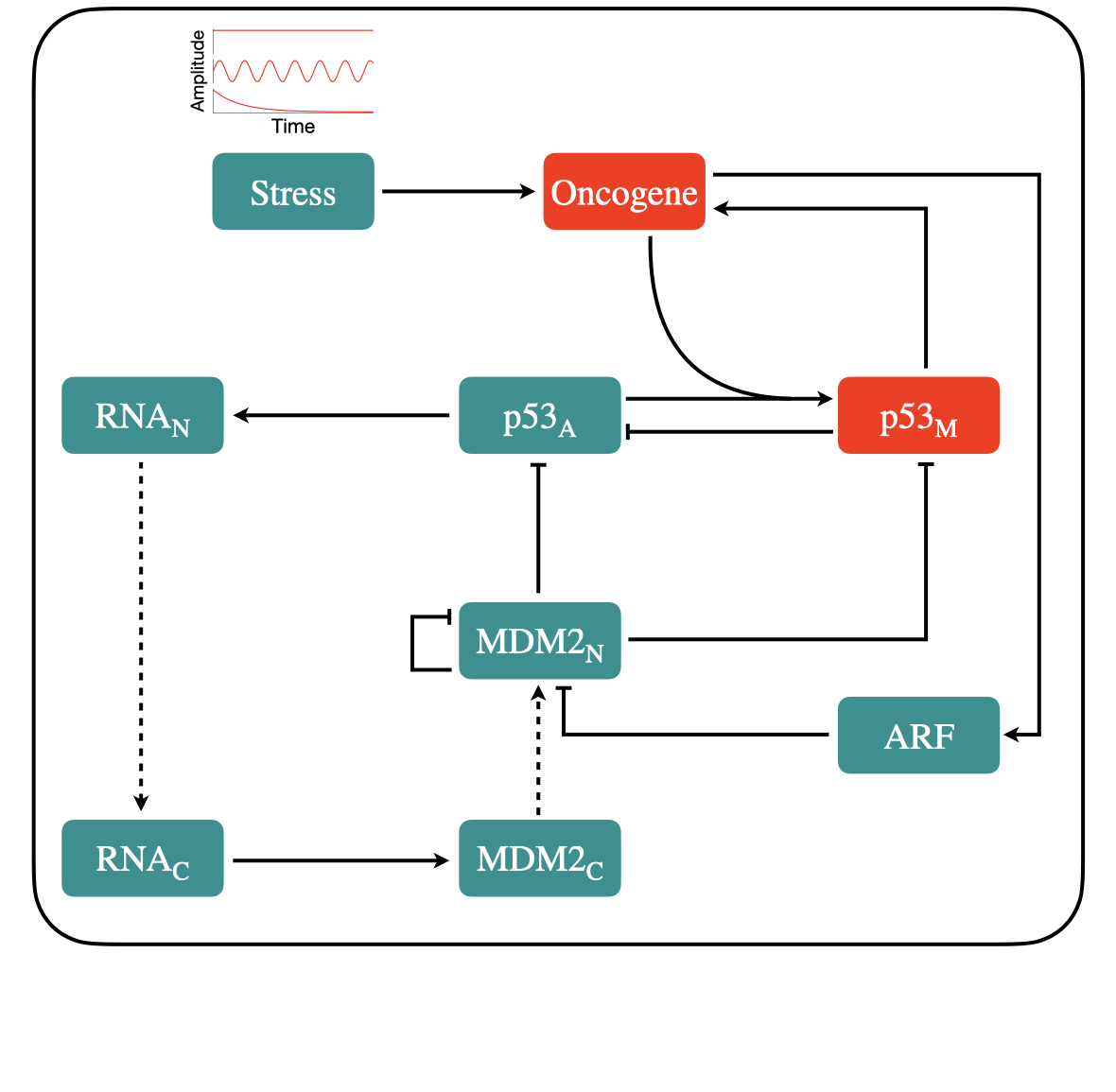
We have
constructed a
stress-driven minimal model of the p53 regulatory network. This regulatory network mainly
consists of
active and mutant forms of tumor suppressor gene p53, MDM2, ARF, oncogene, and three different
forms of
stress. The model mainly represents the competition between an active and mutant form of
tumor-suppressor gene p53. Depending on the nature of the external stress, four distinct
dynamical
states of p53 are observed. These dynamical states correspond to active, apoptosis,
pre-malignant, and
cancer states depending on the level of active and mutant p53. Transitions from cancer to any
other
state are found to be irreversible if stress is either oscillatory or constant. In case of
decaying
stress, the apoptotic state vanishes and for low stress, the pre-malignant state is bounded by
two
critical points, allowing the system to transition reversibly from the active to the
pre-malignant
state. For large stress, the two critical points expand, and the system moves to an irreversible
cancerous state. [Jangid A. et al. Sci. Rep. 11(1)
(2021), Zubair M. et al. Brief. Bioinform.
26(1) (2025)]
Nucleus and noise regulating cell fate decision
We
have
built a
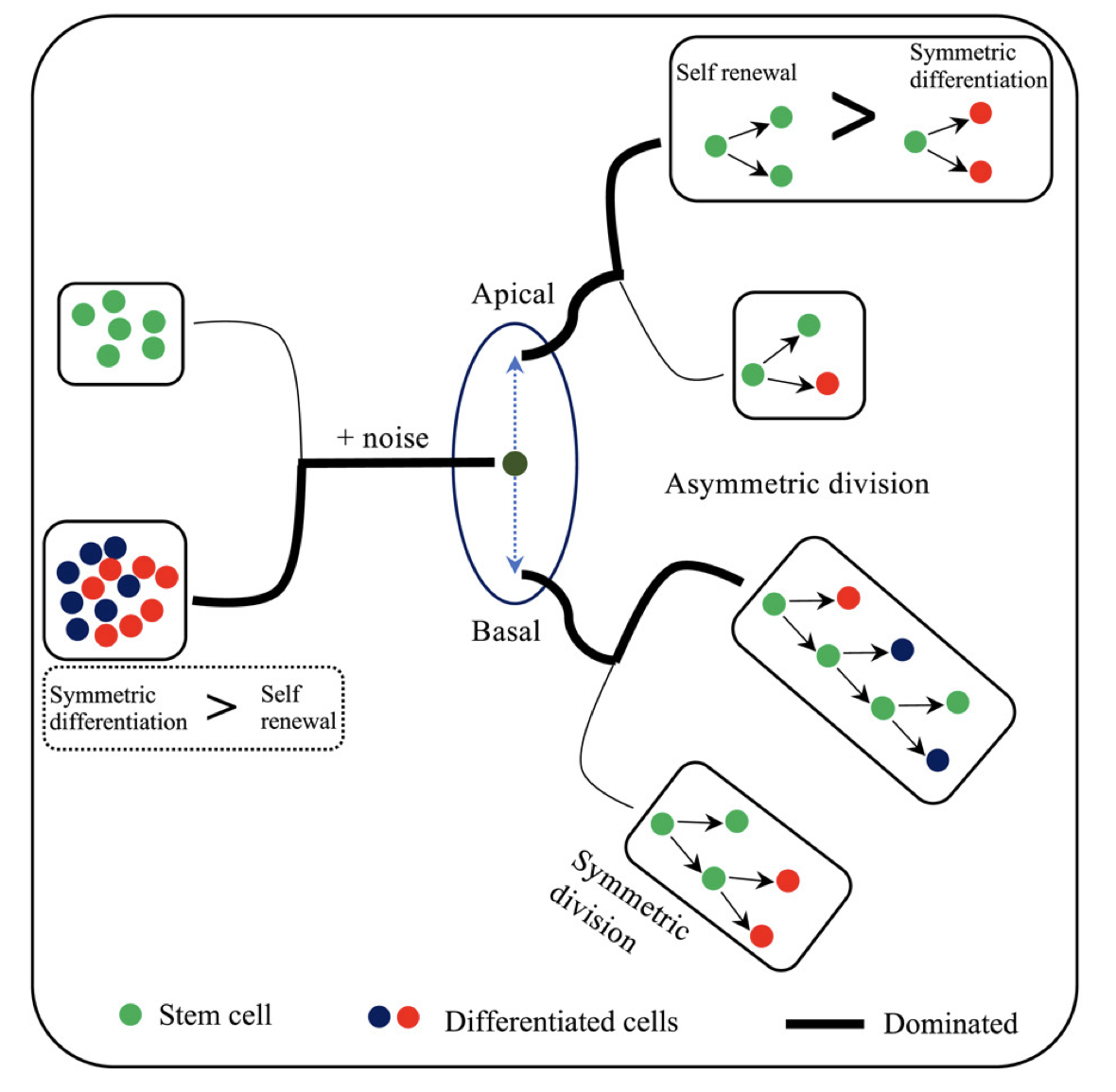
population-based stochastic cellular model starting from a single stem cell which divides
stochastically
to give rise to either stem or differentiated cells. The model consists of three main
components:
nucleus position (with and without noise), gene-regulatory network (GRN, mutual inhibition, and
self-activation,) and stochastic segregation of transcription factors into daughter cells. The
model
shows short and non-terminating (long) genealogies similar to those observed in experimental
studies of
neuroblast and B cells. Non-terminating genealogies have non-zero stem cells whereas in every
short-terminated genealogy, the number of stem cells goes to zero (all leaf nodes are
differentiated
cells). We have compared the model with the coarse-grained Markov model, both leading to
bimodal
probability distributions showing good agreement. The model shows that the nucleus's position
towards
the basal leads to more asymmetric division and apical nuclei enhance symmetric division leading
to more
stem cells. Introducing noise in the nucleus position, more differentiated cells are observed
through
symmetric differentiation. [Jangid A. et al. iScience 24(10)
(2021)]
Collective dynamics of coupled NF-$\kappa$B ensembles
We studied
the
collective dynamics of coupled NF-$\kappa$B ensemble in a diffusive environment driven by
TNF-$\alpha$
molecule. The NF-$\kappa$B gene is known to control various essential genes for smooth
functioning
of
cells. In the model, each NF-$\kappa$B module is coupled via TNF-$\alpha$ diffusive molecule
with
some
coupling strength. Through a suitable order parameter, we observed that for some range of
coupling
strength all coupled NF-$\kappa$B modules are desynchronized, and for some range there is
cluster
formation and chimera states -- few modules will have the same dynamics and few will have their
own
dynamics. We also observed complete synchronization of all modules for some range of coupling
strength.
We also studied another case in which there is heterogeneity in the translation of NF-$\kappa$B
and
observed similar behavior.
Education
Experience
Hebrew University of Jerusalem, Israel
Topic: Evolution of S-RNase-based self-incompatibility in the collaborative non-self recognition (CNSR) system in the structured and panmictic populations
Advisor: Dr. Tamar Friedlander
Jawaharlal Nehru University, New Delhi
Topic: Noise-regulated cell fate decision and dynamics of coupled NF-$\kappa$B oscillators
Jawaharlal Nehru University, New Delhi
Topic: Modeling stress-driven p53 regulatory network and cytokines-regulated skin disease
Central University of Rajasthan, Ajmer
Topic: Computational neuroscience and synchronization
Jawaharlal Nehru University, New Delhi
Topic: Stochastic simulation algorithms
Education
Jawaharlal Nehru University, New Delhi
Title: Modeling Molecular and Cellular-level Interactions in Biological Systems
Advisor: Prof. Ramakrishna Ramaswamy & Prof. R. K. Brojen Singh
Jawaharlal Nehru University, New Delhi
Pre-PhD Course Work (First ranker)
Central University of Rajasthan, Ajmer
Title: Study of Bio-Physical Properties of Neurons, Modeling and Synchronization
Advisor: Dr. Thounaojam Umeshkanta Singh
University of Rajasthan, Jaipur
Publications
- Volatile but
persistent co-existence of self-compatibility and self-incompatibility in plants.
Amit Jangid, O. N. Feldheim and T. Friedlander. bioRxiv (2025). [ under review PRX Life ] -
Reconciling conflicting selection pressures in the plant collaborative
non-self recognition self-incompatibility system.
Amit Jangid, K. Erez, O. N. Feldheim and T. Friedlander. Phys. Rev. Res. 7(3) (2025). - Complex p53 dynamics regulated by miR-125b in cellular
responses to reactive oxidative stress and DNA damage.
M. Z. Malik, M. Dashti, Amit Jangid ... T. A. Thanaraj. Brief. Bioinform. 26(1) (2025). - The role of promiscuous molecular recognition in the
evolution of RNase-based
self-incompatibility in plants.
K. Erez*, Amit Jangid*, O. N. Feldheim and T. Friedlander. Nat. Commun. 15(1) (2024). [* co-first author] - Modeling of indirect cell-cell interaction networks
mediated by IFN-$\gamma$/IL-4 cytokines involved in atopic dermatitis.
R. Pandey, Amit Jangid, R. G. Vinjamuri and R. Ramaswamy. Theor. Biol. 556 (2023). - A stochastic model of homeostasis: the roles of noise and
nuclear positioning in deciding cell fate.
Amit Jangid*, S. Selvarajan and R. Ramaswamy. iScience 24(10) (2021). [* correspondence] - Transition and identification of pathological states in p53
dynamics for therapeutic intervention.
Amit Jangid, M. Z. Malik, R. Ramaswamy and R. K. Brojen Singh. Sci. Rep. 11(1) (2021).
Talks/Posters
Talks
- "Collective behavior of locally coupled NF-$\kappa$B oscillators"
'3rd Symposium on Complex Biodynamics & Networks' — Matrix Biopolis, Singapore (December 10-12, 2018).
Posters & Flash Talks
- "From Self-Incompatibility to Mixed Mating: Evolutionary transitions between
mating modes in plants"
'The Annual Meeting of the Society for Molecular Biology & Evolution (SMBE 2026)' — Copenhagen, Denmark (June 28 - July 02, 2026).
- "Volatile but persistent co-existence of self-compatibility and
self-incompatibility in plants"
'Israeli Society for Evolutionary Biology (ISEB)' — Ben-Gurion University of the Negev, Israel (February 10-11, 2026). - "A phase transition between plant mating modes" (Flash talk)
'EMBO | EMBL Symposium: Theory and concepts in biology' — Heidelberg, Germany (May 06 - 09, 2025).
- "Plant collaborative non-self recognition self-incompatibility systems:
facilitating conditions, evolutionary stability, breakdowns, and recovery"
'Israeli Society for Evolutionary Biology (ISEB)' — Hebrew University of Jerusalem, Israel (September 22-23, 2024).
- "Phase transition and evolutionary emergence of self-incompatibility in the
non-self recognition system in plants" (Flash talk)
'BioSoft Day Symposium #5' — Tel Aviv University, Israel (June 27, 2024). - "The role of promiscuous molecular recognition in the evolution of RNase-based
self-incompatibility in plants"
'Stochastic Models and Experiments in Ecology and Biology (SMEEB)' — L'Aquila, Italy (May 28-31, 2024). - "To interact or not to interact:
a toy model for the evolution of the protein-protein interaction network in RNase-based self-incompatibility system"
'Israeli Society for Evolutionary Biology (ISEB)' — University of Haifa, Israel (April 02-03, 2023).
- "A stochastic approach to cell fate decision and homeostasis: symmetric and
asymmetric cell division" (online)
'The European Conference on Mathematical and Theoretical Biology (ECMTB)' — Heidelberg, Germany (September 19-23, 2022).
- "Cancer dynamics: Identification of states for therapeutic
intervention"
'Conference on Nonlinear Systems and Dynamics (CNSD)' — IIT-Kanpur (December 12-15, 2019).
- "Effect of noise in repeated games"
'Conference on Nonlinear Systems and Dynamics (CNSD)' — Jawaharlal Nehru University, New Delhi (October 11 - 14, 2018). - "Networks and sub-networks in atopic dermatitis"
'International Center for Theoretical Physics' — Trieste, Italy (February 19 - March 16, 2018) (funded by ICTP Trieste).
Schools & Conferences
- "Models & Theory in Ecology & Evolution"
'The Steinhardt Museum of Natural History' — Israel (November 09, 2025). - "Populations genomics and systems biology of rapid
evolution"
'Ben-Gurion University of Negev' — Israel (December 18 - 22, 2022). - "Spring college on the physics of complex systems"
'International Center for Theoretical Physics' — Trieste, Italy (February 19 - March 16, 2018) (funded by ICTP Trieste). - "Winter school on quantitative systems biology"
'ICTS' — Bangalore (December 04 - 22, 2017) (informal). - "Econophys-2017 & Asia pacific econophysics conference"
'Jawaharlal Nehru University' — New Delhi (November 15-18, 2017). - "Non-linear dynamics with applications in physics, biophysics, engineering
and other fields"
'Central University of Rajasthan' — Ajmer (December 01 - 20, 2014).
Peer Review
- Nature Communications, Briefings in Bioinformatics, Discover Physics, Plos One.
Organizational
- Co-convenor: Annual Students Symposium-2017, School of Computational and Integrative Sciences, Jawaharlal Nehru University, New Delhi.
Awards & Honors
- Lady Davis Postdoctoral Fellowship (Oct 2025 - Sep 2026), Hebrew University of Jerusalem, Israel.
- Golda Meir Postdoctoral Fellowship (Oct 2024 - Sep 2025), Hebrew University of Jerusalem, Israel.
- Travel grant, International Center for Theoretical Physics (ICTP), Trieste (2018).
- UGC-SRF (Senior Research Fellow) Scholarship (Jan 2018 - Dec 2020).
- Best presentation award at the Annual Students Symposium-2017 JNU New Delhi.
- First Ranker in Pre-PhD examination (2016).
- GATE-2018 in Physics, Rank: 1274, Percentile: 90.57.
- GATE-2016 in Physics, Rank: 1603, Percentile: 83.82.
- UGC-JRF (Junior Research Fellow) Scholarship (Jan 2016 - Dec 2017).
- CSIR-UGC NET for JRF in Physics, Rank: 157, Percentile: over 99.0 (2015).
- GATE-2015 in Physics Rank: 397, Percentile: 94.83.
- CSIR-UGC NET for LS in Physics, Rank: 133, Percentile: over 98.0 (2014).
Scripts/Links
Evolution of S-RNase-based self-incompatibility in the collaborative non-self recognition (CNSR) system in the structured and panmictic populations.
Following Python scripts are common for the collaborative non-self recognition (CNSR) mechanism in S-RNase-based self-incompatibility (SI) system in plants.
Initialization
This script generates the initial population of self-incompatible haplotypes. There are 10
distinct haplotypes and each haplotype has 1 RNase and 9 SLFs.
Click Expand to load script...Interaction
After initializing the population, we run a stochastic simulation to observe how traits
evolve over many generations.
Volatile but persistent co-existence of self-compatibility and self-incompatibility in plants.
This project explores the transitions among three different plant mating modes: self-compatible (SC), self-incompatible (SI), and mixture of both, and the dynamics and stability of mixed-mating states.
Reconciling conflicting selection pressures in the plant collaborative non-self recognition self-incompatibility system.
This project investigates how self-incompatibility systems in plants evolve under conflicting pressures to specifically identify partners while avoiding self-compatibility.
The role of promiscuous molecular recognition in the evolution of RNase-based self-incompatibility in plants.
This project explores how biological networks expand and shrink over time by incorporating interaction promiscuity and multiple protein partners.
Contact
Open to Collaboration:
Quantitative & Systems Biology | Complex Systems
Gene Regulatory Networks | Self-incompatibility | Population Genetics
Email: amitjangid050@gmail.com
Address:
106, Kennedy-Leigh Building C, Plant Sciences and Genetics
The Robert H. Smith Faculty of Agriculture, Food and Environment
Hebrew University of Jerusalem, Rehovot - 7610001, Israel